1
Make better parenting decisions
Instead of reacting impulsively or giving in under pressure, use one simple cue: “Let me think for a moment.” Your child learns patience and understands that your decisions deserve respect.

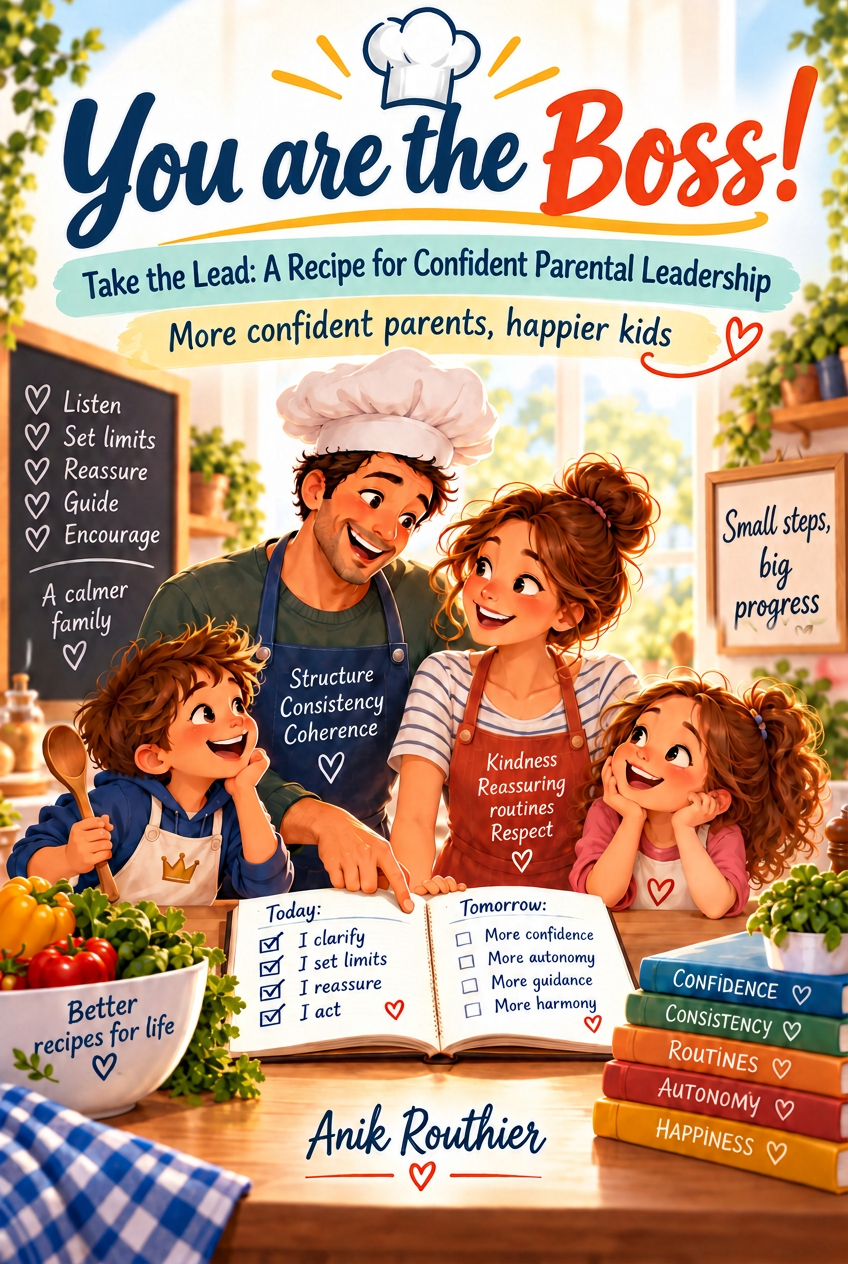
Being the boss doesn’t mean controlling your child. It means knowing where you’re headed, setting clear and reassuring boundaries, making confident decisions, and sticking with them. It also means gradually giving your child the tools to think, choose, take responsibility for their behavior, and become more independent.
In Take the Lead: A Recipe for Confident Parental Leadership, you’ll discover practical, simple—and sometimes deliberately humorous—strategies you can start using in your family life today.
By Anik Routhier — coming in print and digital in December 2026
Plenty of ways to take charge—no magic formula, just a taste of a more harmonious family life.
Instead of reacting impulsively or giving in under pressure, use one simple cue: “Let me think for a moment.” Your child learns patience and understands that your decisions deserve respect.
Use the Democratic Framework, a decision-making tool based on respect for yourself, your environment, and others. Over time, your child can use these questions to develop critical thinking.
Skip the endless explanations and negotiation battles. Learn the broken-record technique: a short, calm, consistent phrase that truly ends the discussion.
The “poop reflex” helps you anticipate what could go wrong, plan your response, and explain the rules before things escalate. Add Madame Horloge, the 10-5-1, the PPP (Preventive Potty Break), and other strategies to make transitions far more predictable.
Rather than making angry threats you’ll never follow through on, learn to prioritize making things right, give apologies their proper meaning, and have a go-to consequence for when inspiration runs dry.
See how your words carry more weight when rules, consequences, and your responses become predictable. The more consistent you are, the less you’ll need to step in. It’s a key theme throughout the book.
With limited choices, you offer independence within the boundaries you’ve set. You’ll also learn to give your child a set amount of time to choose between the expected behavior and the stated consequence.
Learn to ask “how” instead of endless “why?” questions, foster accountability, and gradually help your child find solutions on their own.
Name the emotion, listen without minimizing it, offer a hug, breathe, practice heart coherence—the book offers many tools to help both you and your child find calm again.
Laugh, dance, sing, move, breathe, count, connect… simple ways to help your child move through frustration, anger, disappointment, or sadness—and gradually build self-regulation skills.

And much more…
More tools and tips await throughout the book.

And most of all…
The goal isn’t to raise a child who obeys blindly.
It’s to become a parent who listens, sets boundaries, provides security, makes decisions, and stays the course—while raising a child who learns to think, make choices, take responsibility for them, regulate emotions, and grow more independent.
More consistency. More follow-through. Fewer exhausting negotiations.
More confident parents. Happier kids.